


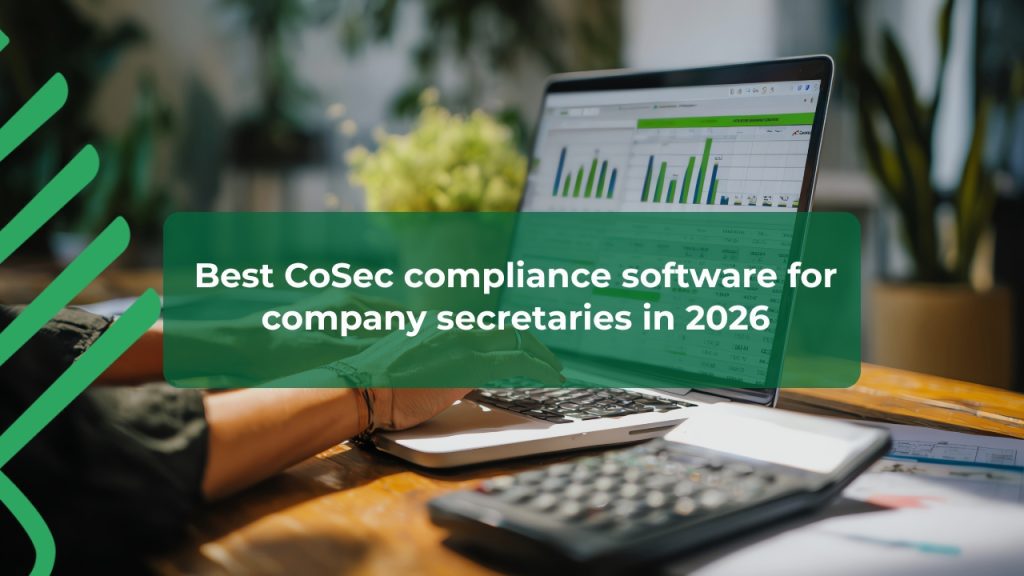
The company secretary function is changing rapidly.
What was once largely viewed as an administrative support role is now becoming central to governance coordination, accountability, board oversight and organisational resilience.
At the same time, governance complexity continues increasing across nearly every sector.
Company secretaries are now expected to manage:
- Multi Entity Governance
- Board Administration
- Regulatory Filings
- Governance Workflows
- Compliance Tracking
- Governance Records
- Audit Trails
- Governance Visibility
- Stakeholder Reporting
- Internal Control Coordination
This is one reason demand for CoSec compliance software is accelerating globally entering 2026.
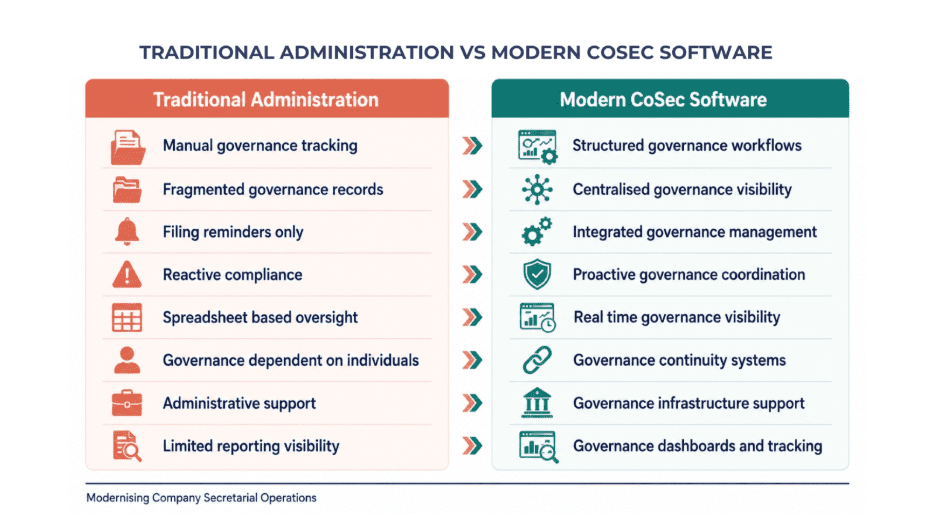
Manual governance administration is increasingly struggling to keep pace with modern governance expectations.
Why traditional governance administration is becoming unsustainable
Many organisations still rely heavily on fragmented governance processes including:
- Emails
- Shared Drives
- Spreadsheets
- Calendar Reminders
- Manual Registers
- Disconnected Filing Systems
This approach often creates hidden governance risk as organisations grow.
Governance records become fragmented, accountability visibility weakens and governance coordination becomes heavily dependent on individuals rather than systems.
The result is governance activity without governance infrastructure.
Modern governance increasingly requires systems capable of supporting visibility, accountability and governance continuity operationally.
That is why company secretarial software is evolving from simple filing tools into broader governance operating platforms.
What company secretaries now need from compliance software
The governance expectations placed on company secretaries continue expanding rapidly.
Strong CoSec software in 2026 increasingly needs to support:
- Board Meeting Coordination
- Governance Workflow Management
- Entity Management
- Compliance Oversight
- Governance Audit Trails
- Board Approvals
- Governance Visibility
- Internal Control Support
- Multi Jurisdiction Oversight
- Governance Reporting
This matters because governance today is not simply about record keeping.
It is about operational accountability and governance resilience.
Boards, regulators, investors and auditors increasingly expect organisations to demonstrate governance systems capable of standing up under scrutiny.
Why governance visibility is becoming critical
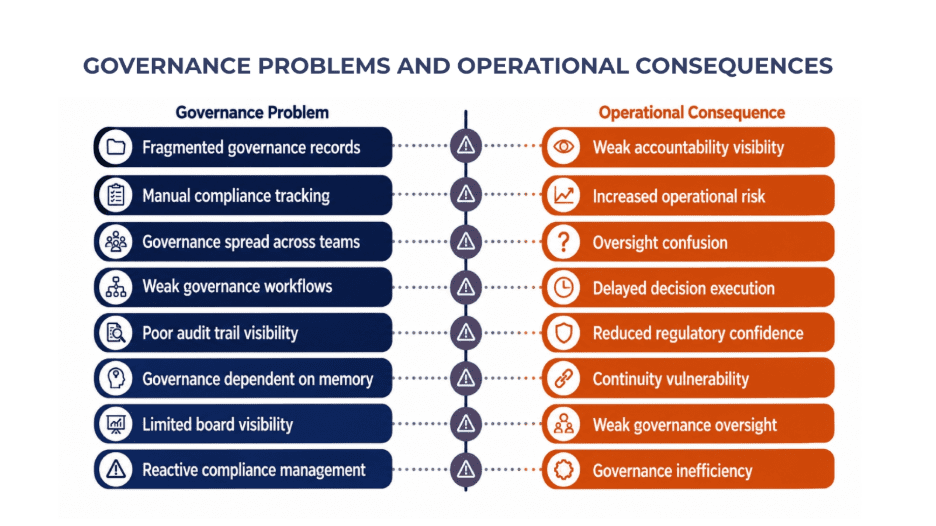
One of the biggest governance weaknesses inside many organisations is lack of visibility.
Governance tasks may be happening continuously, but governance ownership, workflow status and accountability often remain fragmented underneath the surface.
For example:
- Board Actions Remain Outstanding
- Governance Approvals Are Difficult To Trace
- Filings Sit Across Multiple Teams
- Audit Trails Become Incomplete
- Governance Records Become Fragmented
- Compliance Tracking Depends On Emails
This creates operational governance risk.
Modern CoSec software increasingly focuses on centralising governance visibility and operational accountability.
Company secretaries need systems capable of answering governance questions quickly and clearly:
- What governance actions remain open?
- Which filings are overdue?
- What approvals are pending?
- Which entities require attention?
- Where are governance bottlenecks emerging?
- Can governance decisions be fully evidenced?
This is where more advanced governance infrastructure platforms are gaining significant attention.
Why CoSec Hub is attracting attention in 2026
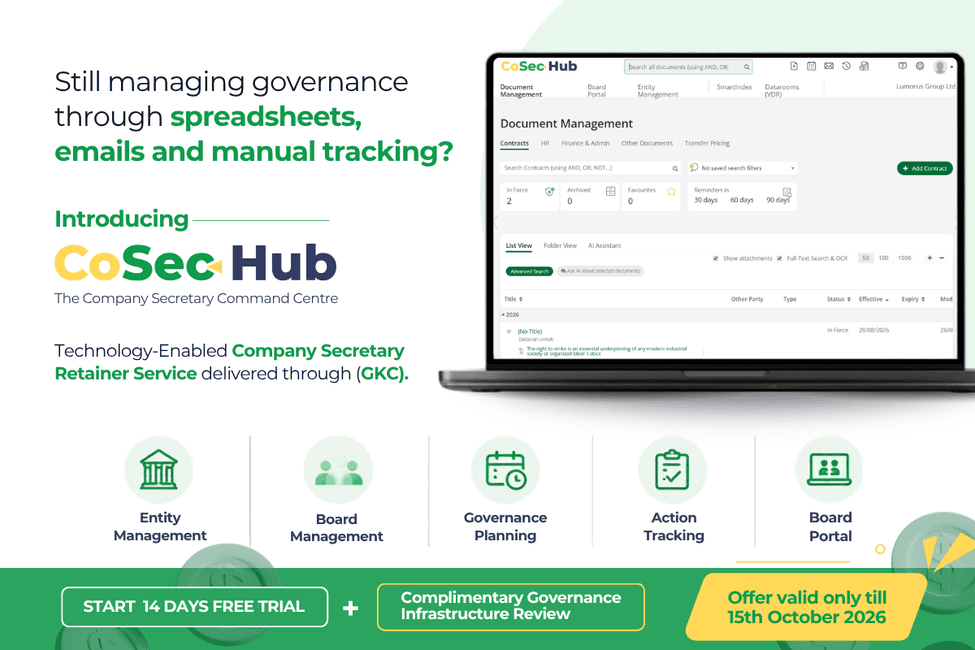
One platform increasingly gaining attention is CoSec Hub.
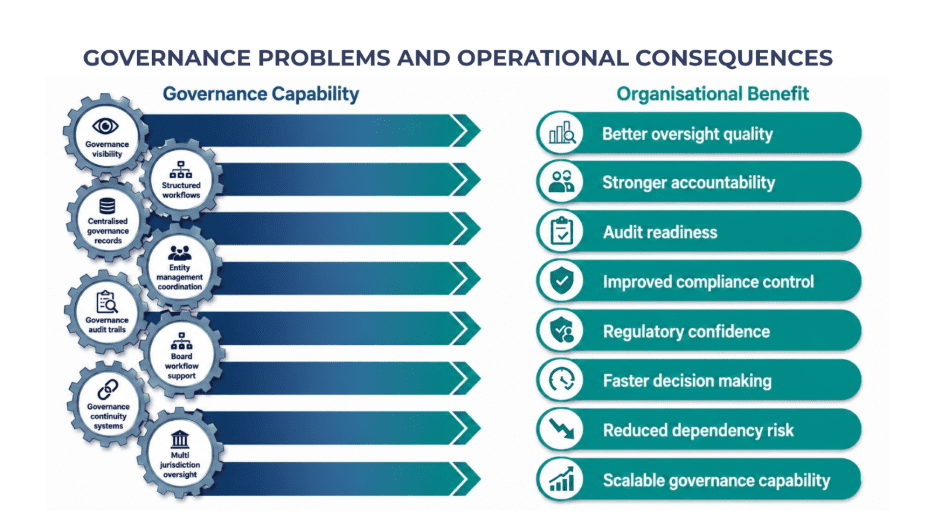
Unlike many traditional company secretarial tools focused primarily on filing reminders and document storage, CoSec Hub is designed more broadly as a governance coordination and compliance management platform.
The platform supports:
- Governance Workflows
- Board Administration
- Entity Management
- Compliance Coordination
- Governance Visibility
- Accountability Tracking
- Governance Audit Trails
- Governance Continuity
This allows governance teams to move away from fragmented manual administration towards more structured governance operations.
One of the platform’s strengths is its focus on operational governance visibility rather than simply document management. Governance tasks can be assigned, tracked, monitored and evidenced through structured workflows and central governance records.
This becomes increasingly important as governance obligations become more complex across jurisdictions, subsidiaries and regulated environments.
Explore CoSec Hub
The rise of governance infrastructure platforms
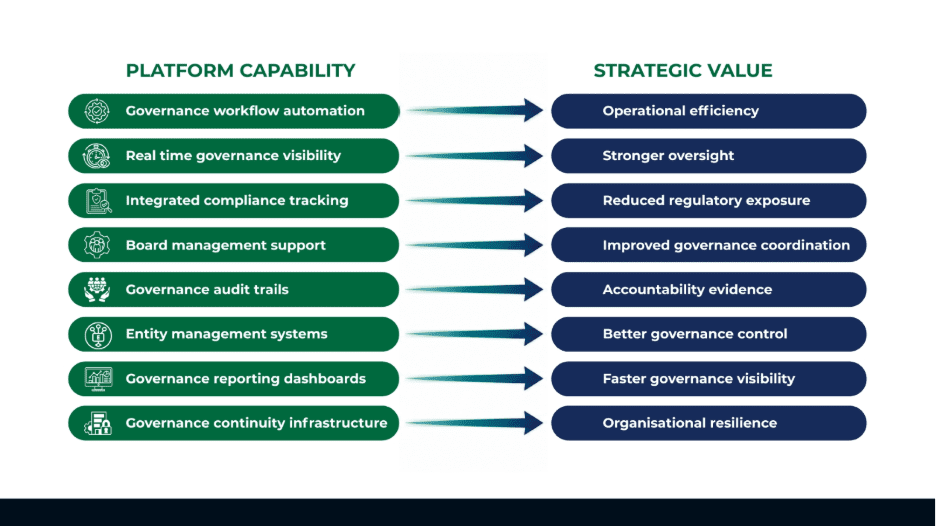
The broader governance technology trend entering 2026 is the rise of governance infrastructure platforms.
This reflects a growing recognition that governance can no longer rely entirely on fragmented manual administration.
Modern governance increasingly requires systems capable of supporting:
- Accountability
- Oversight
- Governance Coordination
- Compliance Visibility
- Decision Integrity
- Governance Evidence
- Operational Resilience
- Organisational Transparency
This is particularly important for organisations operating across multiple entities, jurisdictions and regulatory environments.
Governance complexity is increasing faster than many governance systems are evolving.
That gap is driving much greater interest in governance technology capable of supporting governance operationally rather than administratively.
Governance technology is becoming strategically important
The organisations most likely to govern effectively over the next decade will not necessarily be the organisations with the most governance policies.
They will be the organisations with the strongest governance systems.
That includes governance technology capable of supporting visibility, accountability and operational governance resilience.
This is why company secretarial software is evolving rapidly from administrative tooling towards governance infrastructure platforms capable of supporting governance maturity at scale.
Because modern governance increasingly depends on systems capable of supporting institutional trust operationally, not just procedurally.
Boards and company secretary teams should ask one question: is our governance infrastructure strong enough for the complexity, scrutiny and accountability we now face?
If the answer is uncertain, Lumorus can help.
Contact Lumorus at [email protected] to request a Governance Infrastructure Assessment and explore how CoSec Hub can help your organisation move from fragmented administration to connected, auditable, regulatory compliant and board ready governance.
CoSec Hub, powered by Lumorus: the command centre for the modern company secretary.
About CoSec Hub
CoSec Hub is the governance command centre for the modern company secretary.
Designed for growing businesses, multinational organisations, NGOs and regulated entities, CoSec Hub helps organisations centralise governance operations, strengthen compliance visibility and manage multiple entities through connected, auditable and board-ready governance infrastructure.
Lumorus: Better Business, Built on Purpose
Lumorus is a UK headquartered global governance, company secretarial, ESG and advisory firm supporting organisations across Europe, Africa, Asia, the Caribbean, Canada and other international markets.
For more than 10 years, we have helped boards, leadership teams and organisations strengthen governance, accountability and organisational resilience.
Is your governance infrastructure strong enough for the complexity, scrutiny and accountability you now face?
Contact Lumorus to request a Governance Infrastructure Assessment and explore how CoSec Hub can help your organisation move from fragmented administration to connected, compliant and board-ready governance.
CoSec Hub: cosec.lumorus.com
Lumorus: lumorus.com
Email: [email protected]
CoSec Hub, powered by Lumorus: the command centre for the modern company secretary.